Affordable Oracle


by The Affordable Oracle

Tommy Hilfiger purchased the clock tower. Designers like Armani and Versace have ventured into high-end real estate by selling design and branding services to developers. Tommy took it to the next level and became a developer by acquiring a quite fancy building, the Clock Tower. Here are some pics of the tower.

DSC02538-small

DSC02542-small

DSC02536-small

by The Affordable Oracle

As a valuation specialist in new development, the union vs. non-union labor distinction is important. Unfortunately, the construction industry in NYC is so complex that it’s a whole expertise unto itself. My general disposition (given the limited understanding of the issues) is that non-union labor makes economic sense for most projects, while at the same time Irecognize some benefits/moral arguments for using union labor.

For those that are interested in the issue a good starting point might be the recently released paper titled : Construction Labor Costs in New York City: A Moment of Opportunity

by The Affordable Oracle

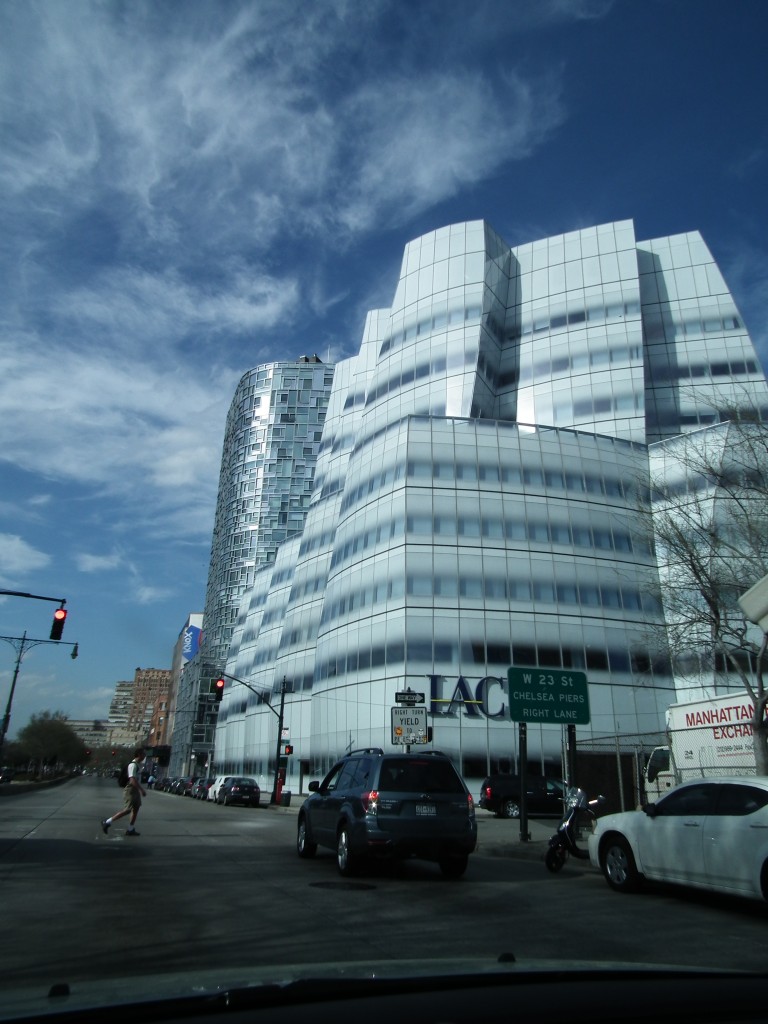
I am a fan of modern looking architecture, on my way to my site visit i passed some nice looking buildings. Here are some photos

Frank Gehry designed IAC Headquarters souther facade and completed in 2007

Frank Gehry designed IAC Headquarters, southern (West 18th Street) facade from the 11th Avenue. Completed in 2007. Jean Nouvel's 100 11th Avenue in the background.

DSCF6213

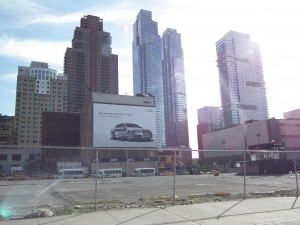
Northern facade of Silver Towers in the center (Larry Silverstein) completed in 2009. Two 60-story towers on 42nd Street and 11th Avenue built as an 80/20 financed by tax exempt private activity bonds issued by HFA. Atelier Condos to the right of the image. 46-stories built by Moinian, second phase in planing stages.

DSCF6191

Tip of the Silver Towers, weird exposure

DSCF6215

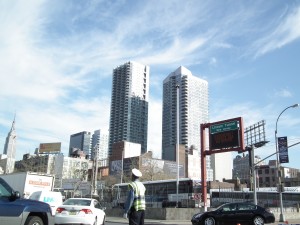
TF Cornerstone's sister towers 455W37 and 505W37

DSCF6217

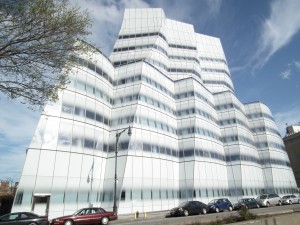
IAC building coming back down 11th Avenue

by The Affordable Oracle

Madison International Realty recently made NYC headlines for acquiring a 49% stake in Forest City Ratner’s NYC retail portfolio. Forest City retained a major controlling stake in the retail portfolio and will continue to operate the investment on behalf of the joint ownership. The structure of the deal makes a lot of sense in that the buyer receives additional assurance in the form of insider sentiment. One of the primary questions any buyer asks themselves is why is the seller getting rid of an asset. Nightmare scenarios often cross the mind of the buyer: “is one of the major tenants signaling that they are leaving, does the property have hidden physical defects, is there a prospective competitor being planned across the street?” In this case the nightmare scenarios are somewhat muted in the buyers mind by the structure of the deal. Forest City has the most intimate knowledge of the asset and is retaining a large stake in the asset after the transaction. What Madison’s investment strategy brings is “insider sentiment” and skin in the game.

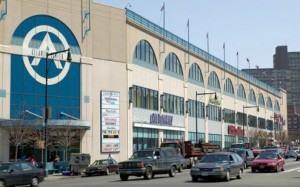
Atlantic Center Mall (one of the portfolio properties)

Atlantic Center

by The Affordable Oracle

Darcy Stacom gave an insightful interview on Bloomberg in mid February. Knowing how hard it is to get her on the phone to verify a comp i figured i would share the video with our readers. I got two main soundbites that have relevance to us.

- “As low as a 3 cap on a trophy”
- “Not a lot of product for sale”

and now to the video

by Mac Kushner, The Informed Appraiser

“I can’t afford to pay them any other way.”
-Andrew Carnegie,
in response a banker’s question, “How can you afford to pay your men so well?”

I’ve long been intrigued by the term “affordable housing”. The very existence of this expression carries with it three distinct implications:

  1. Housing can be affordable, or not affordable.
  2. It ought to be affordable.
  3. Affordable Housing is affordable, and all other housing is….not affordable.

This last notion could reasonably be challenged on the basis of the observation that the vast majority of people do not live in Affordable Housing projects, yet are somehow able to afford their places of residence. A paradox of sorts, I suppose.

The basic argument in support of government-subsidized Affordable Housing is that it provides a place for low-income individuals to live. However, the flip side is that Affordable Housing, much like its cousins Rent Stabilization and Rent Control, artificially constricts the supply of market-rate housing (relative to what the supply would be if the Affordable Housing units were at market). This in turn puts increased upward pressure on market rents, thereby further justifying the existence of the Affordable Housing. Thus, one might say that the need for Affordable Housing is exacerbated by the very existence of Affordable Housing itself.

by The Affordable Oracle

Oil prices are on the rise again. So most landlords and investors will factor that into their fuel expense line item when making next year’s budget or underwriting an acquisition. What many (or maybe just me) fail to realize is that natural gas prices have been de-linked from oil prices for some time now. According to this 2008 article on Seeking Alpha the delinkage occurred around 2005 and there is no consensus as to when the two commodities will re-link.

I pulled weekly prices from the Department of Energy of both commodities and ran some basic statistical analysis. The data series compared included, #2 heating oil and natural gas prices from 2004 through 2010. No data on heating oil was available for the months of March-September. My findings seem to agree with both articles indicating that oil and gas are not linked having a correlation coefficient of -0.02, which for those of you who have forgotten your stats means a very low correlation.

I tried measuring which fuel source is more volitile however this data set does not permit such an analysis because it did not include delivery/transport costs associated with each fuel, rather it simply represents wholesale pricing. Con-Ed charges a transport fee, the oil delivery companys charge a delivery fee.

I assume that end user costs are higher and more volatile for oil buildings rather than natural gas buildings. This is based on the fact that many buildings began converting their oil boilers to duel fuel and all new buildings tend to have natural gas boilers installed.

#2 Oil vs Natural Gas Prices 2004-2010

by The Affordable Oracle

This week’s article titled Investors Pick Their No. 1 in the Commercial Observer highlights the flurry of sales activity within the Class A residential market, a market which has remained quiet since Macklowe’s sale of three buildings to EQR.

Michael Stoler identifies five Class A properties built since 1990 that are either in contract or are being marketed. Since the article was published news broke of another pending in the financial district, 10 Hanover Square.

Two of the transactions have some atypical cicumstances; 88 Leonard benefits from low floater bonds which not many investors can appreciate while 10 Hanover Sq. was some form of UpREIT transaction. If the sales go though we are looking at over a billion dollars of new Class A rental building sales.

Sales Summary Table

Source :www.libertytowersapts.com

Liberty Towers

———————————————————————-

88 Leonard Street

————————————————————————-

Source: http://www.nyifund.com/

Corner (200 West 72nd Street)

———————————————————————


Sagamore (189 West 89th Street)

———————————————————-


Source: http://www.akmarch.com/elektra/

Elektra (290 Third Avenue)

——————————————————-

Source: wirednewyork.com

10 Hanover Square


by The Affordable Oracle

We hear it all the time, that a transaction was done “off-market”. Many real estate funds indicate that they will add value by seeking deal flow through “quiet” or “off-market” channels. As appraisers we are often told by buyers that they secured a transaction “off-market” and so it was bought below market price. But what are the reasons that transactions get done in such a fashion, after all the knee jerk reaction is that a market sale will undoubtedly procure the highest proceeds for the seller. I will begin the list and hopefully others can contribute their insight as to reasons why transactions get done “off-market”.

1. Some real estate requires extensive due diligence to arrive at a bid and so prospective buyers are hesitant to spend money pursuing a transaction knowing they are one of a large pool of bidders. So an offering to only a handful of qualified buyers will assure bidders that their pursuit costs are justifiable.

2. A situation where a property has one or two logical buyers a seller can solicit negotiations with those entities directly and possibly negotiate a lower brokerage commission

An excellent example of this is a conduit air right lot, in other words a lot that prevents 10-foot continuity necessary for the transfer of air rights in New York City.

by The Affordable Oracle

While out on inspection I picked up an interesting bit of real estate trivia from a property manager. Apparently Starbucks coffee prep operation requires a constantly running faucet for cleansing latte-macchiato-double-express-utensils. The cost of this faucet has caught many landlords off guard, so I figured…how bad can it be?. I did some back-of-the-envelope number crunching and here are my results:

Gallons/min

4

Gallons/hour

240

Gallons/day (6am - 11pm)

4,080

Gallons/year

1,489,200

W&S rate/gallon (NYC)

$0.01021

Annual water and sewer bill

$15,205

$/SF (1,000 SF store)

$15.20

The running faucet generates a $15,205 water bill.

Next Page »

  • Categories

  • Tags