Archive for March, 2012

New York’s Rent Control and Rent Stabilization laws were introduced many decades ago, originally intended as temporary measures. They have proven to be surprising durable, and owing to their longevity have grown to become part of the very fabric of the housing market in New York City. Some people - particularly those who do not happen to live in a regulated unit with a sub-market rent - view these laws as unfair, essentially giving an arbitrary windfall to select individuals while leaving others paying sky-high rents.

Over the years, there have been various challenges to these laws, and the Supreme Court is currently considering a case filed by James Harmon, a Manhattan landlord who is questioning New York’s rent control laws on the basis that they constitute a unconstitutional taking of property. How the court will decide this case remains to be seen, but given that similar challenges have been struck down in the past, it would be surprising if the challenge is upheld.

On the surface, it would seem that this battle is just about dollars and cents. However, a recent feature in the New York Times suggests that there might be more than financial implications at stake here. The article tells of one Mr. Arnold Warwick, who, thanks to rent control, has the good fortune of occupying a 1,200 SF apartment in Greenwich Village for a the measly sum of $331.76 per month - a small fraction of what it would rent for at market. Mr. Warwick, who has lived in the unit for over 50 years, is quoted as saying “I don’t plan on dying, because I don’t want to give up a rent-controlled apartment.”

So, rent control may be much more than a financial boon. In some cases, it may represent nothing short of a reason to go on living. If New York’s rent control laws are struck down, could this cause some folks to give it all up and go on to a better place?

We’re pacing the hallways eagerly awaiting the release of the 2011 Housing & Vacancy Survey, the triennial study prepared on behalf of HPD that gives a snapshot of New York City’s housing market. In our appraisals we continue to cite the most recent survey published in 2008, to which we’ve received comments like “isn’t there more recent data available?” and to which I reply “No!” According to the authors it should be released by the end of March, however, there has been a recent release of Select Initial Findings. These include:

  • The number of housing units in New York City was 3,352,041 in 2011, the largest
    housing stock in the forty-six-year period since the first HVS was conducted in 1965
  • Of the City’s 3,352,000 housing units, 997,000 units or 30 percent were located in
    Brooklyn. Smaller numbers were located in Manhattan (841,000 or 25 percent) and
    Queens (828,000 or 25 percent). The remaining fifth was located in the Bronx
    (510,000 or 15 percent) and Staten Island (175,000 or 5 percent)
  • There were 987,000 rent-stabilized units (occupied and vacant available), comprising
    45 percent of the rental stock in 2011
  • Rent-controlled units numbered 38,000, or 2 percent of the rental stock in 2011

Great stats, right? Haven’t compared this yet with the prior 2008 data, but is it any wonder that we love this stuff?

Photo by James Dunne - The CREative Department

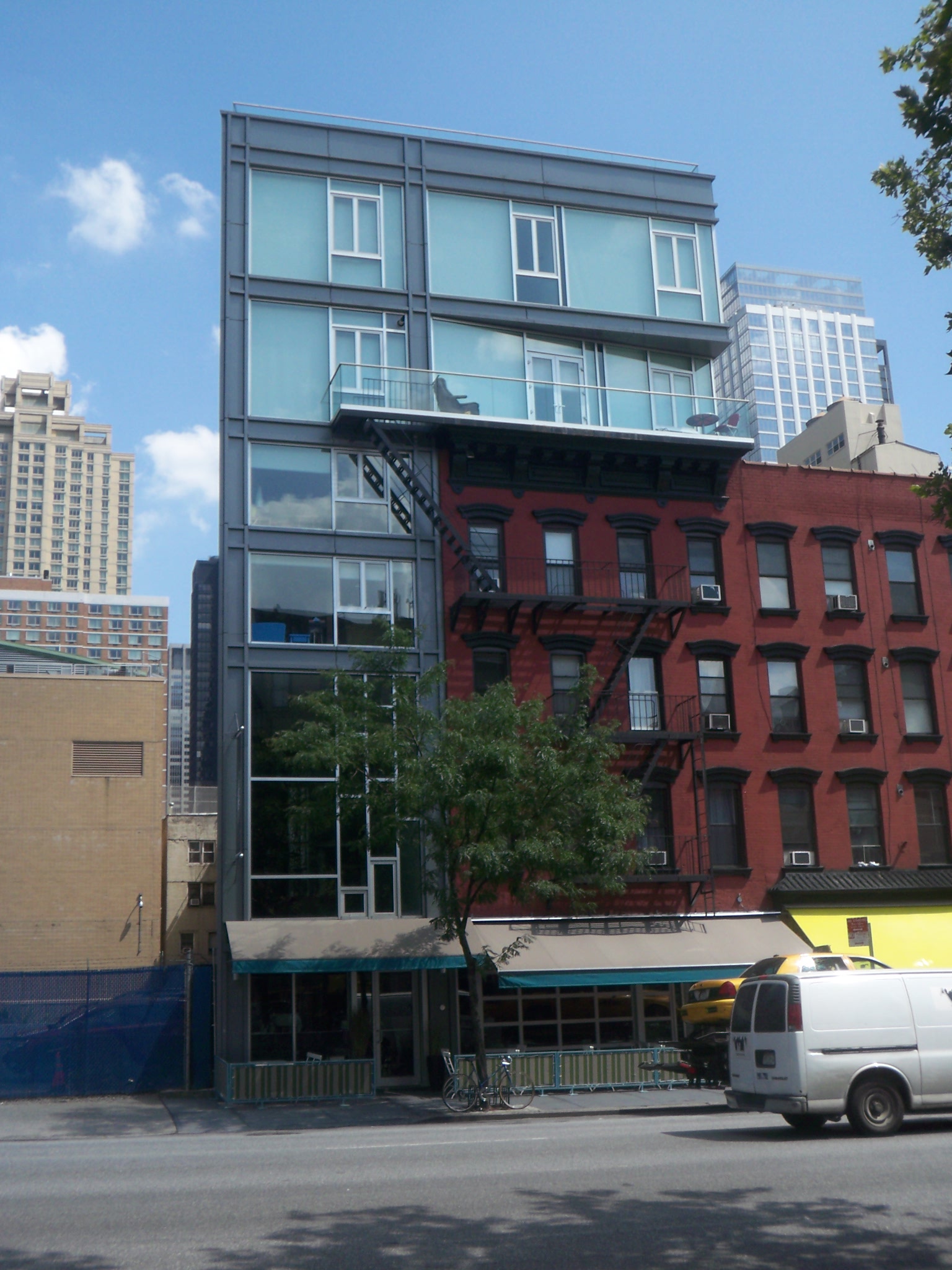
This is a picture of a newly constructed building on 9th Ave in the Clinton neighborhood of Manhattan:

9th Ave Building

I couldn’t resist posting this.

After a bit of an interruption, the saga continues.

In previous editions of USPAP, the Ethics Rule included a requirement that the appraiser maintain adequate records (workfiles). Some folks had voiced concern about this state of affairs, under which an appraiser could be found in violation of the Ethics Rule for failing to maintain an adequate workfile, even by mistake. While such a failure is certainly irresponsible - perhaps even negligent - it seems unfair to automatically categorize this as “unethical”. Appraisers are only human, and mistakes can happen.

In response, for the 2012-2013 USPAP the Appraisal Standards Board made the bold move of taking this requirement out of the Ethics Rule and instead fashioning it into a brand-spanking-new Record Keeping Rule. (If you ask me, it should really be the Recordkeeping Rule; alas, they did not ask me.) Now, failure to maintain an adequate workfile is only a violation of the Record Keeping Rule rather than a more serious Ethics Rule violation.

There is, however, a major caveat: In conjunction with this change, the ASB also added a new provision to the Ethics Rule. This provision states that anyone who willfully or knowingly violates the Record Keeping Rule is also in violation of the Ethics Rule.

In order words, the ASB is saying that the intentional failure to maintain adequate records does indeed rise to the level of being unethical. I, for one, think this is a reasonable assertion.

However, the ASB has left me scratching my head on this one, and here’s why:

Could not this very same distinction - between intentional and unintentional infractions - be applied to several other requirements within the Ethics Rule? For example, one of the Ethics requirements is that the appraiser “Must not misrepresent his or her role when providing valuation services that are outside of appraisal practice.” I would consider this unethical only if the misrepresentation was intentional. So perhaps the ASB should create a separate Misrepresentation Rule, and leave a provision in the Ethics Rule to cover intentional misrepresentation.

The same could be said of another Ethics Rule requirement, which states that the appraiser “Must not engage in criminal conduct.” (Yes, this is akin to a law making it illegal to break the law.) Shouldn’t this be an Ethics Rule violation only if the appraiser engages in criminal conduct intentionally?

Editor’s Note: I promise that this will be the last post on USPAP for a while!

Use a forklift of course.

It’s common practice that NYC parking garages in high-trafficked areas of Manhattan routinely fill their garages up to double their stated maximum capacity during the day. In fact, this is usually the only way the operators can turn a profit. Typically, the garage operator rents the garage from a building owner, and usually the rates charged for the monthly fees for the “official” spots will only allow the operators to cover their rent. Profit comes from every extra car they can squeeze into the garage during the day.

I was inspecting a building recently, and asked how this Smart Car got into this spot (there’s literally an inch on each side). Without batting an eye, the operator told me “with a fork-lift of course.”

I’ve been following with great interest the lawsuit brought by James and Jeanne Harmon, owners of a small brownstone building on West 76th Street. The Harmons have three rent-stabilized tenants and have been fighting to have the rent stabilization laws overturned, on the grounds that it violates due process laws of the 5th and 14th amendments and represents a taking of their property. Their battle has received a lot of press, most recently this past weekend in a New York Times article, Wars Over Regulation of Rent Only a Sideshow. How can it not make you angry to read that one of their tenants is paying a stabilized rent so far below market that she can afford a weekend home on Long Island, which is effectively being subsidized by the Harmons!

According to The Times article, Mr. Harmon has petitioned the US Supreme Court to hear his case. I have no idea how likely it is that the Court will do so, but I hope they do. The Harmons’ situation is by no means unique. Landlords throughout the city are effectively subsidizing tenants’ luxuries, while another tenant in an identical apartment across the hall may be paying four times as much in rent, or more. I am very much in favor of maintaining affordable housing in New York City (I’m even a member of the NYS Affordable Housing Association!), but current rent stabilization laws are not the way to do it.

  • Categories

  • Tags