Archive for April, 2011

by The Affordable Oracle

I am a fan of modern looking architecture, on my way to my site visit i passed some nice looking buildings. Here are some photos

Frank Gehry designed IAC Headquarters souther facade and completed in 2007

Frank Gehry designed IAC Headquarters, southern (West 18th Street) facade from the 11th Avenue. Completed in 2007. Jean Nouvel's 100 11th Avenue in the background.

DSCF6213

Northern facade of Silver Towers in the center (Larry Silverstein) completed in 2009. Two 60-story towers on 42nd Street and 11th Avenue built as an 80/20 financed by tax exempt private activity bonds issued by HFA. Atelier Condos to the right of the image. 46-stories built by Moinian, second phase in planing stages.

DSCF6191

Tip of the Silver Towers, weird exposure

DSCF6215

TF Cornerstone's sister towers 455W37 and 505W37

DSCF6217

IAC building coming back down 11th Avenue

by Marc Kushner, The Informed Appraiser (got to give credit where it’s due!)

A few chuckles (or groans) to start off your week:

Q. What method should be utilized in the valuation of a fitness club?
A. The GIM.

Q. What is the best way to appraise a marina?
A. Using the Sails Comparison Approach.

Q. What is Santa’s preferred narrative report format?
A. Elf-Contained.

Since I’ve been told that my sense of humor (or lack thereof) is best experienced in small doses, I’ll end this post here….

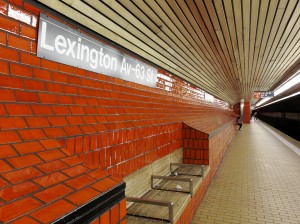
Another shout by our resident artist, Marc Kushner. Here Marc coaxes the colors out of the NYC subway system…

IMG_2319a

by The Affordable Oracle

Madison International Realty recently made NYC headlines for acquiring a 49% stake in Forest City Ratner’s NYC retail portfolio. Forest City retained a major controlling stake in the retail portfolio and will continue to operate the investment on behalf of the joint ownership. The structure of the deal makes a lot of sense in that the buyer receives additional assurance in the form of insider sentiment. One of the primary questions any buyer asks themselves is why is the seller getting rid of an asset. Nightmare scenarios often cross the mind of the buyer: “is one of the major tenants signaling that they are leaving, does the property have hidden physical defects, is there a prospective competitor being planned across the street?” In this case the nightmare scenarios are somewhat muted in the buyers mind by the structure of the deal. Forest City has the most intimate knowledge of the asset and is retaining a large stake in the asset after the transaction. What Madison’s investment strategy brings is “insider sentiment” and skin in the game.

Atlantic Center Mall (one of the portfolio properties)

Atlantic Center

by The Affordable Oracle

There is an interesting high profile, high stakes battled going on between two well known money managers. What are they arguing about? The value of Florida land and the resulting valuation of St. Joe’s REIT.

Background story:

St, Joe’s was originally a timber land owner in Florida that amassed closed to 1,000,000 acres of land in northeast Florida. In the late 90’s they switched gears and hired a guy out of Disney to reposition the company and transform it into a Real Estate Development Company. Today the company is sitting on close to 500,000 acres of land, the majority of which is agricultural.. They also have several projects in various stages of development.

The Short:

On October 13, 2010 David Einhorn of Greenlight Capital made a presentation to a group of investors at the Value Investing Congress completely bashing St. Joe’s, and concluding to the fact that they are worth $7-$10 per share (trading at $24.54 at the time of the presentation). Two years before David made a similar presentation to the same group bashing Lehman Brother; needless to say they were listening. In his 139 slide presentation David dissects each and every development in St. Joe’s portfolio and shows comps, absorption data and correlates it the reported book value of each asset. He says St. Joe’s needs to impair almost every asset and they are refusing to do so on their public financials. The presentation can be found by clicking here.

The Long View:

On the other side of the table is Bruce Berkowitz of Fairholme Fund, a mutual fund that has had a stellar track record. Bruce has been bullish on St. Joe’s for a while and he holds a huge stake in the company through his fund. So huge that he made it to the company’s board. Bruce says the company is undervalued at $25. His rebuttal presentation just released on in February 2011 points out that his pal at Greenlight Capital used dated images and thus presented St. Joe’s assets in bad light. The presentation was put together by a professional photographer and not by a financial analyst, there is 21 pages of pictures and absolutely no numbers. The presentation can be found here.

My Take

If you ask me, the meat of David’s argument was not the pictures; it was his comps, absorption data and highest and best use analysis. His pictures were probably picked to illustrate his bullish perspective for those in the audience that are not good with numbers or were too liberal with the complimentary cocktails to concentrate. Now i don’t know the Florida market and i don’t know if David picked bad comps, but i assume if he did Bruce would not rebut with pictures but with other comps. To date Bruce is winning, St. Joe’s is trading at $25/share and has a market cap of $2.3B.




by Marc Kushner, The Informed Appraiser

Today is the day!

No, I’m not referring to April Fool’s, although that’s worth a mention as well.

What I’m referring to is the fact that today is the day when compliance with the Federal Reserve Board’s Interim Final Rule regarding appraisal independence becomes mandatory rather than optional. This rule was announced by the Fed on October 18, 2010, and was the result of the Dodd-Frank Act, which was signed into law back in July 2010.

For those not already familiar with the Interim Final Rule, this is the one that specifies, among other things, the requirement to pay “customary and reasonable” fees to appraisers.

I can’t help but wonder who came up with the term, “Interim Final Rule”. That’s a classic, textbook example of an oxymoron. It makes as much sense as saying “Temporary Permanent Rule” or “Optional Mandatory Rule”. (Perhaps it’s the same people who tell us that the employment market is experiencing “negative growth”.)

Between the unfortunate choice of name as well as the selection of April Fool’s Day for mandatory implementation, something tells me these regulations might not prove to be the panacea many appraisers were hoping for. Ultimately, only time will tell.

  • Categories

  • Tags