Thu 24 Dec 2009
Commercial Grade Takes a Break
Posted by John Cicero under Uncategorized
No Comments
Phew…this blogging stuff is exhausting! Taking a break for the holidays. Best wishers to all for a happy, healthy and prosperous 2010!
Thu 24 Dec 2009
Posted by John Cicero under Uncategorized
No Comments
Phew…this blogging stuff is exhausting! Taking a break for the holidays. Best wishers to all for a happy, healthy and prosperous 2010!
Tue 22 Dec 2009
Posted by John Cicero under Resident Hipster, Uncategorized
No Comments
By Tyler King, Resident Hipster
Dear Santa,
I have been a very good appraiser this year and all I want for Christmas is some data points. Sales Santa! I want to see some sales! Back in the glory days of 2007 when an assignment would come across my desk I would rest assured knowing that data was aplenty and brokers were going to not only elaborate on the details of the sales when I called them, they were going to wax poetic on the market in general. But 2009 brought an end to this.
With a dearth of sales across all property types, data has been harder to come by than a clean shot on an albino saber tooth tiger with two font teeth missing. All year long the common anthem was that although the data is somewhat dated, it nonetheless represents the best data available. Furthermore, when I call brokers for opinions, instead of excitedly boasting about the abundance of sales activity I mostly hear grunts and groans (and sometimes a high pitched whine) on the other end of the telephone.
There appears to be a thaw going on as we speak. Heck we even saw some actual land sales. The players are beginning to play again and that makes my job much easier. So Santa, please, please, please, just give me some sales. I just need something to hang my hat on.
Thanks,
Tyler
Thu 17 Dec 2009
Posted by John Cicero under Affordable Oracle, Condos, Real estate taxes
1 Comment
By Affordable Oracle, Gleb Lerman
A lot of our clients including developers and lenders have asked us to analyze a “rental fallback” scenario for planned or under construction residential condominium projects. In some cases a rental fallback is viewed as an interim use until condominium pricing increases. Although we are not experts on the law one problem that can arise under such strategy is the inability to remove a renter once the owner decides it’s time to sell a unit.
For those that don’t know (those that do skip to the next paragraph!) a rental fallback analysis looks at the value of a condominium building if the units were operated as a rental apartment building rather than sold. The reason it’s called a “fallback” is that historically here in NYC the value as a condominium has been substantially higher than the value as a rental. Therefore, operation as a rental is often seen as a worst-case scenario for failed condo projects.
The rub is that most newly built residential projects in NYC seek benefits under the 421-a tax exemption program. The program is codified in Chapter 6 (HPD) of Title 28 (Tax Exemption Pursuant to 421-a) of the Rules of the City of New York. Section 6-02(g)(II) provides that a building receiving benefits under the 421-a program will be subject to NYC rent stabilization which among other things limits maximum annual rental increases and requires landlords to offer renewal leases.
So, the question is: if a condo building plans on operating as a rental on an interim basis until it can sell its units – and it is receiving 421a tax benefits – will it really be able to sell those units when market conditions permit?…or would it have to wait for the stabilized tenant to vacate or the expiration of the tax benefits in order to destabilize the units?
One solution may be to have the condominium plan declared effective first, thus waiving the 421-a requirement of rent stabilization, however condominium law requires that 15% of the apartments be sold or in contract. (Section 6-02(g)(II) provides for a waiver from rent stabilization if the building has condominium or cooperative status.)
Disclaimer: This is complicated stuff and we are not lawyers! Get real legal advice before doing anything with your failed condo building!
Wed 16 Dec 2009
Posted by John Cicero under Rent regulation
[2] Comments
Much has been written on the Appeal’s Court recent ruling on Stuy Town and Peter Cooper Village. Like much of the real estate community I have been asking myself how anyone with $5.4 billion to spend could have blown it like this. I also asked myself why there was even a question since rent stabilization guidelines have always said that buildings that receive tax benefits are rent stabilized for the duration of those benefits.
In a just released report, Barbara Byrne Denham, Chief Economist of Eastern Consolidated Properties, lays out a clear explanation of the controversy. In her report The Ruling On Stuyvesant Town and Peter Cooper Village Rent Decontrol: A Synopsis of the Decision and its Implications, Ms. Denham sheds some light on why the Appellate Division overturned the Supreme Court’s initial ruling dismissing the tenants’ complaint.
In short, Ms. Denham explains that
…the RRRA made an exception to luxury decontrol which stated that the deregulating of units “shall not apply to housing accommodations which became or become subject to the Rent Stabilization Laws (RSL) by virtue of receiving tax benefits pursuant to” the J-51 laws (section 489 of the real property tax law).
This had been commonly interpreted to mean that buildings that were stabilized prior to receipt of any tax benefits could de-control units. However, the Appellate Division ruled
The majority further disputed the meaning of “by virtue of” stating that “by virtue of” does not necessarily mean the same thing as “solely by virtue of.”
To me this sounds eerily reminiscent of that famous line “it depends what your definition of is is”!
Well, I finally get it now! Many thanks to Barbara Byrne Denham for explaining what this whole mess was really about.
Wed 16 Dec 2009
Posted by John Cicero under Affordable Housing
No Comments
According to a recent article in Crain’s New York, the Bloomberg Administration will be hitting a major milestone this month with the development of its 100,000th affordable housing unit. The creation of affordable housing is one of the hallmarks of the Bloomberg Administration. The mayor’s New Housing Marketplace initiative is to create or preserve 165,000 units of affordable housing in New York City. Announced in 2003, the administration reports that the plan is right on schedule.
While the rest of the real estate market has slumbered this past year, affordable housing has continued to chug along. Our firm has been very active in the appraisal of affordable housing projects in New York City. These projects typically involve an alphabet soup of programs: LAMP, MIRP, NHOP using LIHTC and HDC, HPD and AHC subsidies. (More on this in future posts from our own Affordable Oracle, Gleb Lerman.) It’s actually quite impressive to see this marriage of government subsidy and private enterprise come together to transform entire neighborhoods.
We’ve got affordable and luxury housing covered. All we need now is a new initiative to create middle-income housing….something for households earning between $50,000 and $500,000 a year!
Fri 11 Dec 2009
Posted by John Cicero under Out in the Streets
No Comments
We’re out and about the streets of New York all the time, and every so often something interesting catches our eye…
View of Central Park from upper floor of the San Remo, a luxury co-op building

Thu 10 Dec 2009
Posted by John Cicero under 21 Elephants
No Comments
Michael Falsetta, Executive Vice President and New Development Guru, talks about changes in the transfer tax in his blog, 21 Elephants. An excerpt:
“According to yesterday’s NY Law Journal, HUD is in the process of enacting a new regulation designed to bring down closing costs on houses, condos, and co-ops. I’ve heard a lot of people complain about closing costs- especially when little unexpected extra costs show up on the morning of the closing, like a 1/2 of a mortgage point for the mortgage broker, a ‘gratuity’ for the title closer, etc.”
Tue 8 Dec 2009
Posted by John Cicero under Building Sales
No Comments
In the “green shoots” category, more signs of a thaw in the market. After months (a year?) when apartment building sales were all small, generally under $10 million, there has been a flurry of activity of sales of larger multi-family apartment buildings.
7 East 32nd Street, a 77-unit elevator apartment building, sold in November for $20,250,000, or $510 per square foot; 10 West 74th Street, 72 units, sold in October for $38 million, or $529 per square foot, and 205 West 88th Street also sold in October for $25.9 million, though this building sold for only $270 psf as many of its leases were below market. The cap rates were reported to be in the 4.5% to 5.0% range, suggesting that the buildings had some rental upside. Not sure how they were financed but I’m guessing that there was credit available…just like the old days!
Not sure what to make of a couple of new apartment building sales, but appraisers just love new data points!
Thu 3 Dec 2009
Posted by John Cicero under Out in the Streets
No Comments
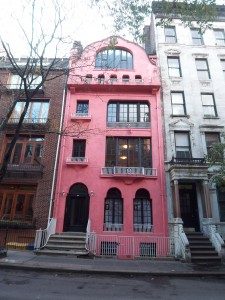
We’re out and about the streets of New York all the time, and every so often something interesting catches our eye…
114 Waverly Place, a 4-unit apartment building
Wed 2 Dec 2009
Posted by John Cicero under Condos, Mortgages, Resident Hipster
No Comments
By Tyler King, Resident Hipster
During the unsure times of early 2009, when appraisers, lenders, investors, brokers, and developers all stood quivering in the rain, FHA backed mortgages rolled into town. It rode in on a mighty steed, promising nearly nothing down for buyers and unit sales for builders. I remember towards the end of the first quarter speaking with brokers in Williamsburg. All were marketing buildings that were actually selling units, and all had pending FHA approval. These buildings must not be confused with the buildings without pending FHA approval that were gearing up for bankruptcy. But what were the true implications of these FHA mortgages? This sugar-coated gumdrop of a plan on the surface appeared to be a blessing, but now watchful eyes are falling upon its sweet, sweet nectar (also known as closed sales in new condo developments in Brooklyn).
Let me briefly explain what an FHA backed mortgage is: Essentially, it allows a prospective buyer, even a so-so credit rated buyer to qualify for a mortgage that requires near nothing down. This means that pesky hurdle of saving-up your nickels and dimes for a few years to afford a down payment for the biggest purchase of one’s life is no longer an obstacle. Instead, you can wait for your security deposit from your current rental to come through and you can move into a brand new, stainless steel applianced, soaring ceilinged, bamboo floored condo in Brooklyn. Conventional banks give these loans to the prospective buyer because FHA (a.k.a. the federal government) guarantees against default. Buying an apartment is easy again!
Now why would this be a problem? I mean having a bunch of new homeowner’s running around Brooklyn with no skin in the game wouldn’t be a problem now would it? The way I see it, it sure is easy to walk away from an apartment when the value declines by 20% in the first year of ownership and you only have 3.5% of the skin in the game. It is kind of like not getting your deposit back because you scratched up the floor in your rental, but this time your are not getting your equity back on an apartment you never really purchased.


New York commercial consulting, appraisal, advisory

New York residential consulting, appraisal, research

Unraveling the DNA of the housing market

Housing market seminars